The instrument
How a pipe organ makes its sound
Wind, pipes, stops and keyboards: the parts of the instrument behind the concert, in plain terms and with sources.
Book the concert ↗Quick answer
A pipe organ makes sound by pushing air under pressure, called wind, through pipes chosen from a keyboard. Every pipe sounds one note, so the pipes are grouped in sets called ranks, and knobs called stops decide which ranks speak. The organist plays one or more keyboards with the hands and a pedalboard with the feet. Because the wind is continuous, notes can be held as long as the key stays down, which is one reason the organ is called the king of instruments.
Wind
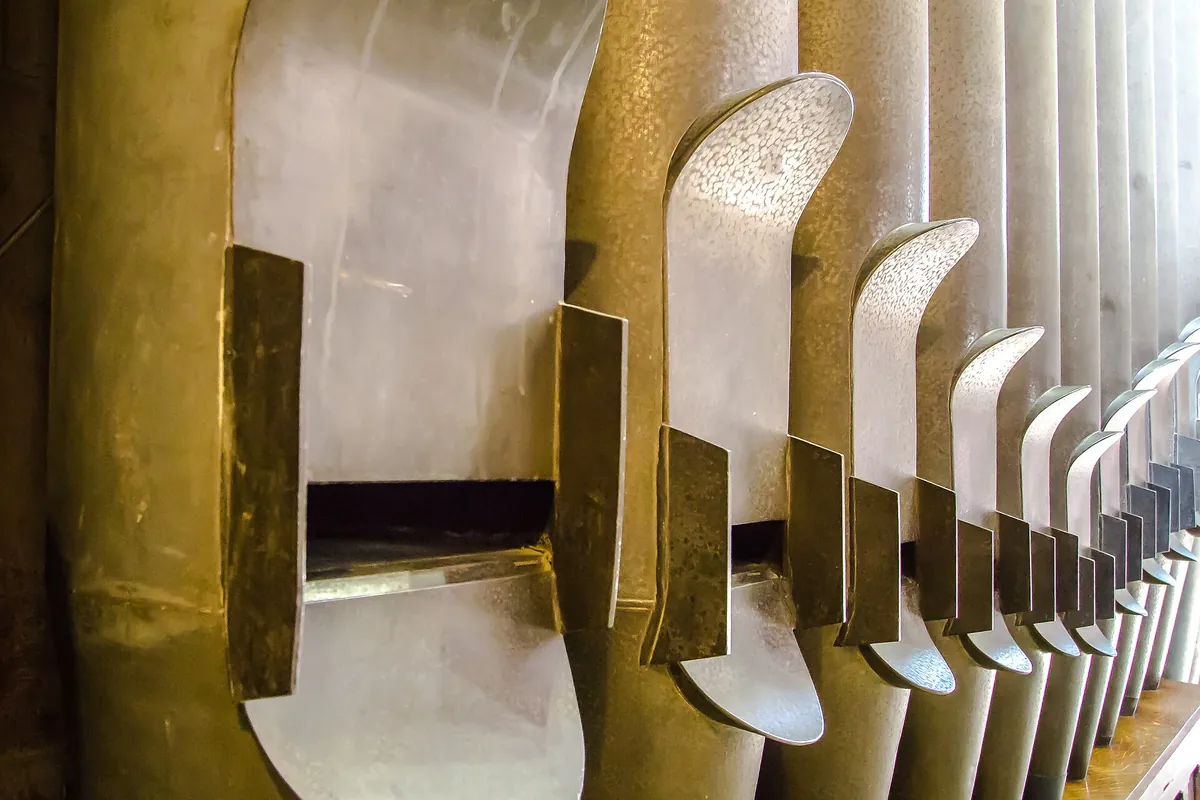
English Wikipedia says an organ speaks when wind, air under pressure, is forced through pipes picked at a keyboard. The air supply is the heart of it. Before motors, someone had to work bellows by hand, and the article notes that a person called a calcant operated them when the organist signalled. From the mid-19th century bellows were gradually replaced by water, steam and gasoline engines, and from the 1860s by rotating turbines later driven by electric motors. Most organs today use an electric blower, and the wind is stored in regulators to keep the pressure steady.
Pipes and ranks
Each pipe produces one pitch, so an organ needs a pipe for every note it can play. The longer the pipe, the lower the note. A set of pipes with the same tone quality across the keyboard is a rank, and most organs hold many ranks. English Wikipedia sorts pipes into flue pipes, which speak by sending air across a lip much like a recorder, and reed pipes, which use a beating reed like a clarinet or saxophone. Pipes are made of wood or metal. Their volume cannot easily be changed while playing, which is why an organ gets its range from combining ranks.
Stops: choosing the voice
A stop is the control that lets wind reach a rank. The article says that for a pipe to sound, its stop must be on and its key must be down. Stops come at different pitch levels labelled in feet: an 8-foot stop sounds at the written pitch, a 4-foot stop an octave higher and a 16-foot stop an octave lower. An organist combines stops to change the colour of the sound, from a soft flute-like voice to a full, bright chorus. Stop names are not standardised between organs, so two similar stops can carry different names.
Keyboards, pedals and the console
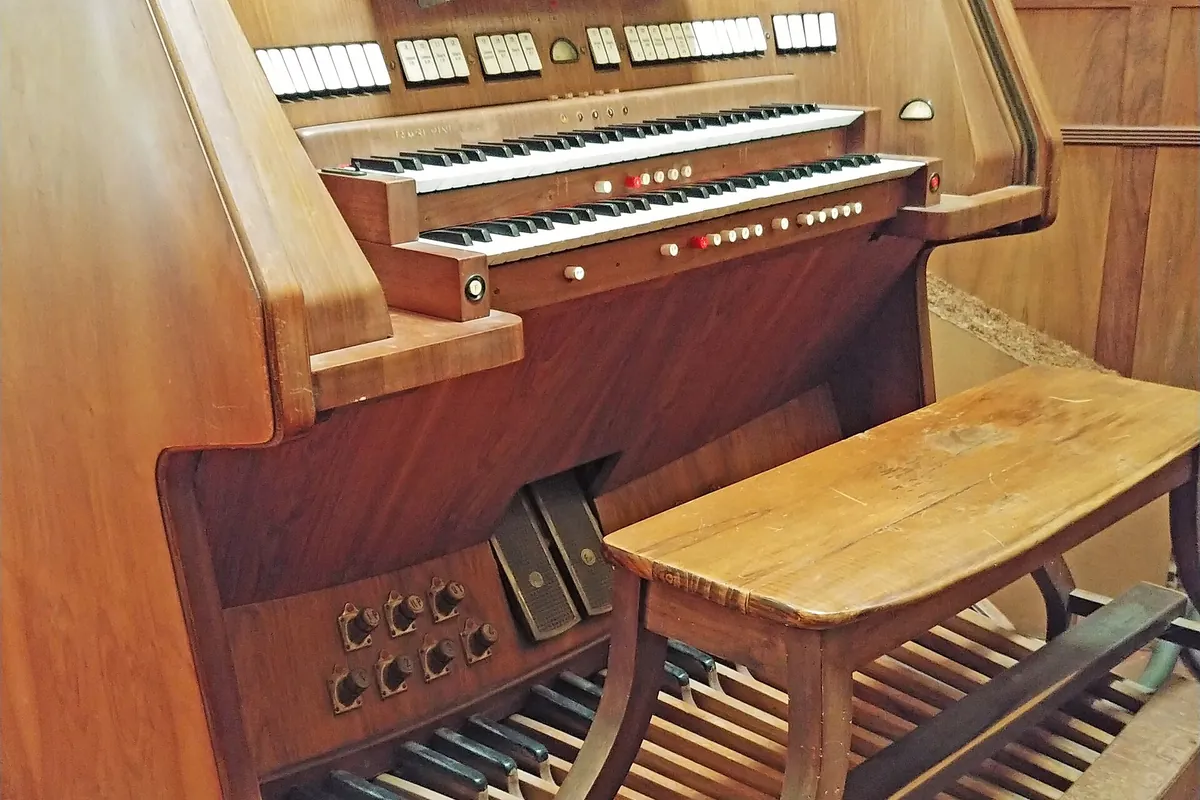
Keyboards played by hand are called manuals, from the Latin for hand, and the one played by foot is the pedalboard. English Wikipedia says every organ has at least one manual, most have two or more, and most have a pedalboard. Current specifications often call for two or more manuals of 61 notes, five octaves, and a pedalboard of 30 or 32 notes. Each keyboard usually controls its own division of ranks, and the keyboards, pedalboard and stops sit together in the console. The console can be built into the case or stand apart from it.
From water to bellows: a short history
English Wikipedia credits the Greek engineer Ctesibius of Alexandria with inventing the organ in the 3rd century BC, in the form of the water-powered hydraulis. It says a pipe organ with great leaden pipes was sent to the West in 757 as a gift to Pepin the Short, and that his son Charlemagne asked for a similar one for his chapel in Aachen in 812. The first organ documented as permanently installed was at Halberstadt in 1361. By the 17th century most of the sounds of the modern classical organ had developed, the article says.
Read next: Italy's organ tradition, from the Antegnati family to Tamburini
Why the room matters
An organ is built for a specific space, and the room shapes what you hear. In a stone church the low notes carry and the sound can linger after the key is released. That is why a concert in a vaulted church feels different from a recording. Italian Wikipedia describes Sant'Angelo as a single wide nave with a barrel vault and side chapels, and says its organ's pipes are placed in the two arms of the transept. The listing is silent on how the concert is arranged, so listen for it on the day rather than expecting a particular effect.
Why people call it the king of instruments
English Wikipedia says the first documented permanent organ, at Halberstadt in 1361, likely prompted the poet and composer Guillaume de Machaut to call the organ the king of instruments, a description still often used. The concert's listing adds that the organist explains the same phrase during the hour. The reasons are easy to hear: the organ's range, its ability to sustain and its sheer volume set it apart. For a first-time listener, the low pedal notes are often what you feel as much as hear.
Frequently asked questions
What is a rank?
A set of pipes with the same tone quality, one pipe for each note on the keyboard; English Wikipedia calls it the unit stops select.
How many pipes does an organ have?
It varies enormously. English Wikipedia says the smallest portable organs may have one or two dozen pipes, while the largest can have over 33,000.
What is a manual?
A hand keyboard. Most organs have two or more, plus a pedalboard played with the feet.
Sources