The tradition
Italy's organ tradition, from the Antegnati family to Tamburini
How Italian organs were built in the Renaissance, why Milan Cathedral asked an Antegnati for one in 1552, and who Tamburini was.
Book the concert ↗Quick answer
Italy has a long organ-building tradition. English Wikipedia describes the Italian Baroque organ as often having one keyboard and no pedals, built on a chorus of Principale ranks with very small pipes at the top. The Antegnati family of Brescia were famed builders whose Costanzo Antegnati wrote a 1608 book on 144 of their organs, and in 1552 Giacomo Antegnati was commissioned to build an organ for Milan Cathedral's choir. The Tamburini firm, founded in 1893, built the organ that Italian Wikipedia lists at Sant'Angelo.
The Italian organ, in outline
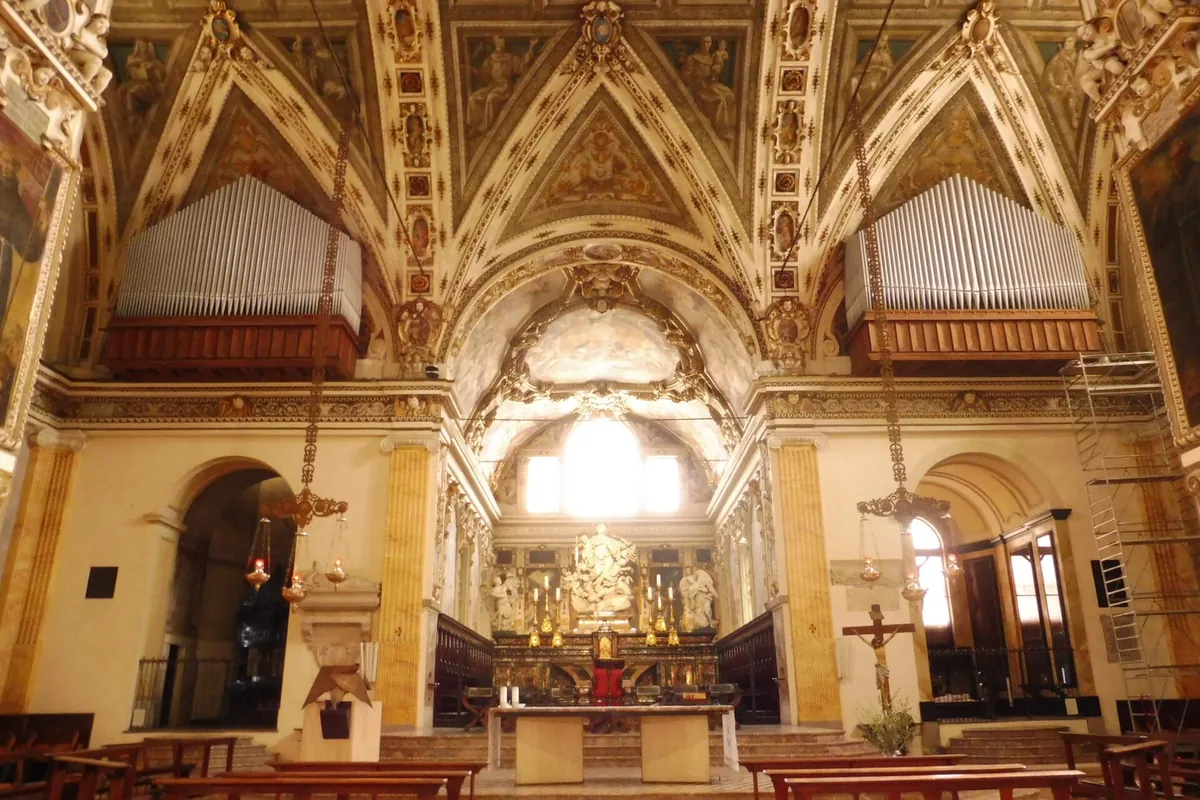
English Wikipedia says that in France, as in Italy, Spain and Portugal, organs were mainly designed to play alternate verses of the liturgy rather than to accompany congregational singing. The Italian Baroque organ, it says, was often a single-manual instrument without pedals, built on a full chorus of octaves and fifths. Its stop names indicated pitch relative to the fundamental, the Principale. Its highest ranks 'broke back', with the smallest pipes replaced by pipes an octave lower so that the top of the keyboard stayed audible. It describes the result as a kind of composite treble mixture.
Wind and character
The same article gives a detail about wind. It says an Italian organ of the Renaissance period may run on a wind pressure of only 2.2 inches of water, or 56 millimetres, against about 2.75 inches as a typical pipe organ figure and far more for solo stops in some large 20th-century instruments. That is a general description of Renaissance practice, not a claim about the instrument you will hear.
The Antegnati of Brescia
English Wikipedia's article on Costanzo Antegnati says he was born in Brescia on 9 December 1549 into a family of prolific organ builders. Working with his father, he built the Antegnati organ of 1581 for the friars of Saint Joseph's Church in Brescia, which the article says was at one time the largest and most famous in the world. Of the few instruments that survive, it names the Antegnati organ of Saint Nicholas in Bergamo, from 1588, restored in 1996. He was organist at Brescia cathedral from 1584 until 1619.
L'arte organica
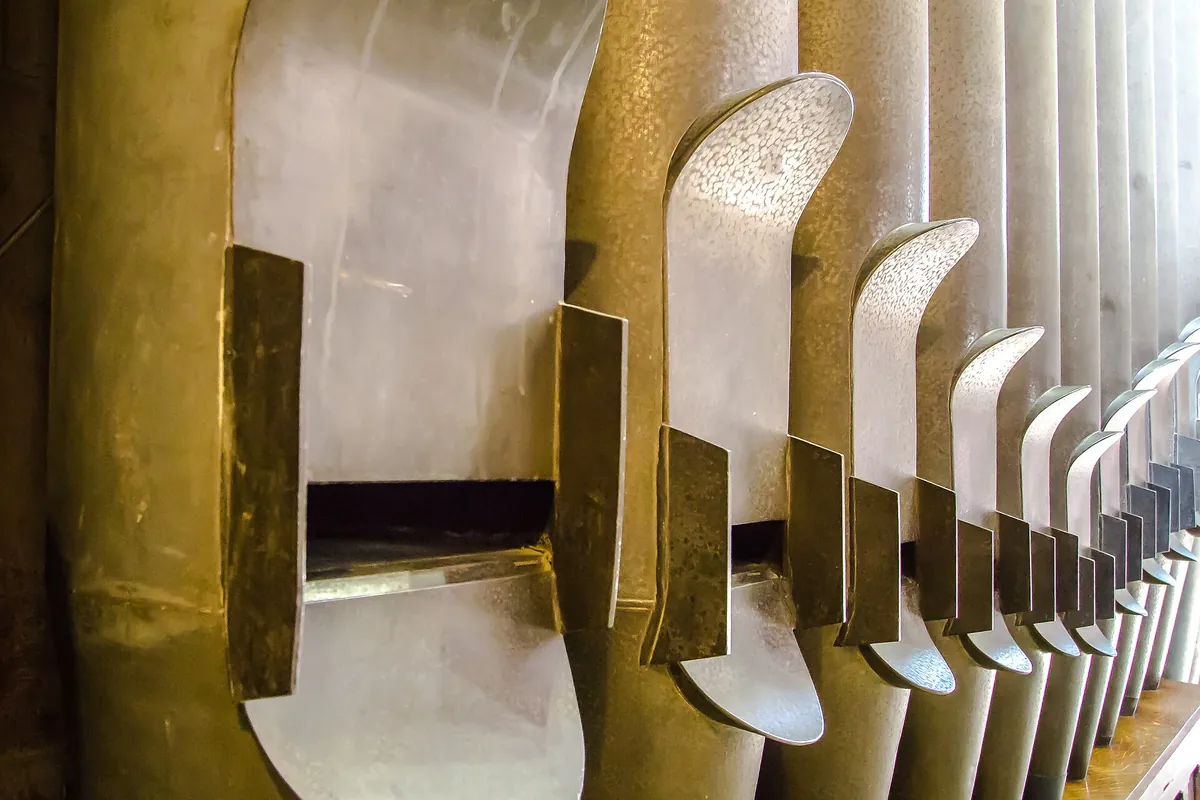
Costanzo Antegnati's best-known work is L'arte organica, published in 1608. English Wikipedia says it gives technical details of 144 organs built by his family, rules for tuning organs and harpsichords, and advice on registration, which means choosing which stops to combine. It is the kind of book that tells historians how Renaissance Italian organs were made and played, and it shows how professional the craft already was in the late 16th century.
Milan Cathedral and the Antegnati
English Wikipedia's article on Milan Cathedral records that in 1552 Giacomo Antegnati was commissioned to build a large organ for the north side of the choir. The same year the first stone of Sant'Angelo was laid, according to Italian Wikipedia. The cathedral's presbytery today contains two large organs, the article says. So in the middle of the 16th century, Milan was commissioning both a great organ in its cathedral and a new Franciscan church, and the Antegnati were building in the same city.
Tamburini and the 20th-century organ
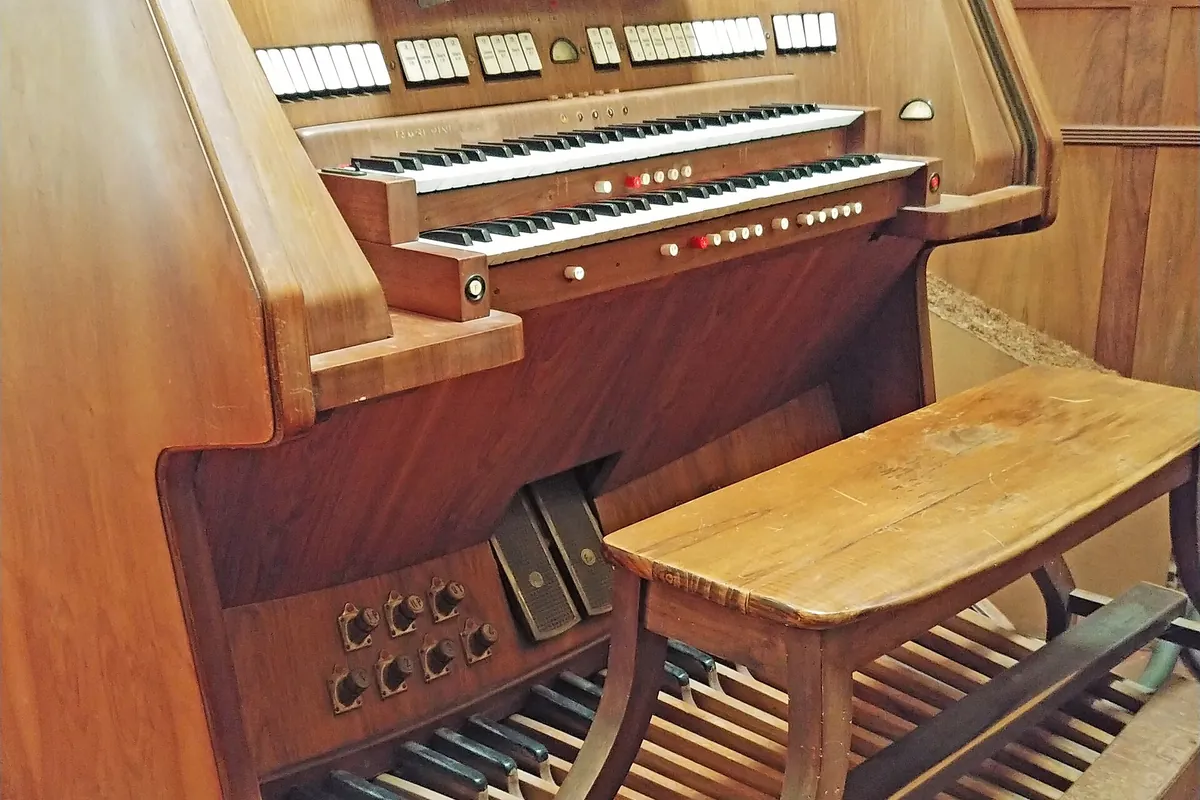
Italian Wikipedia says Giovanni Tamburini, born at Bagnacavallo in 1857 and died in Crema in 1942, trained with several organ builders and founded his own factory in 1893, with his first organ built in 1894 for the church of Nogarè. It credits him with important contributions to electric and pneumatic transmission systems and says the firm still operates, run by a great-grandson. Italian Wikipedia lists Sant'Angelo's organ as a Tamburini, opus 372, with four keyboards of 61 notes and a pedalboard of 32. The booking page does not say which instrument the concert uses.
What to listen for
If the organ is the Tamburini that Italian Wikipedia describes, with four keyboards and pipes in the two arms of the transept, expect a broad sound that comes from both sides of the church. The booking page does not say which instrument is used, so treat that as a possibility, not a promise. On the day, listen for how the sound travels down the nave and what the organist says about the instrument.
Frequently asked questions
Who were the Antegnati?
A family of organ builders from Brescia. English Wikipedia says Costanzo Antegnati wrote L'arte organica, a 1608 book that details 144 organs built by his family.
Who founded Tamburini?
Italian Wikipedia says Giovanni Tamburini founded his organ factory in 1893 and built his first organ in 1894.
Is the concert played on an Antegnati organ?
The listing says nothing of the kind. The Antegnati are background on how Italian organ building developed.
Sources